
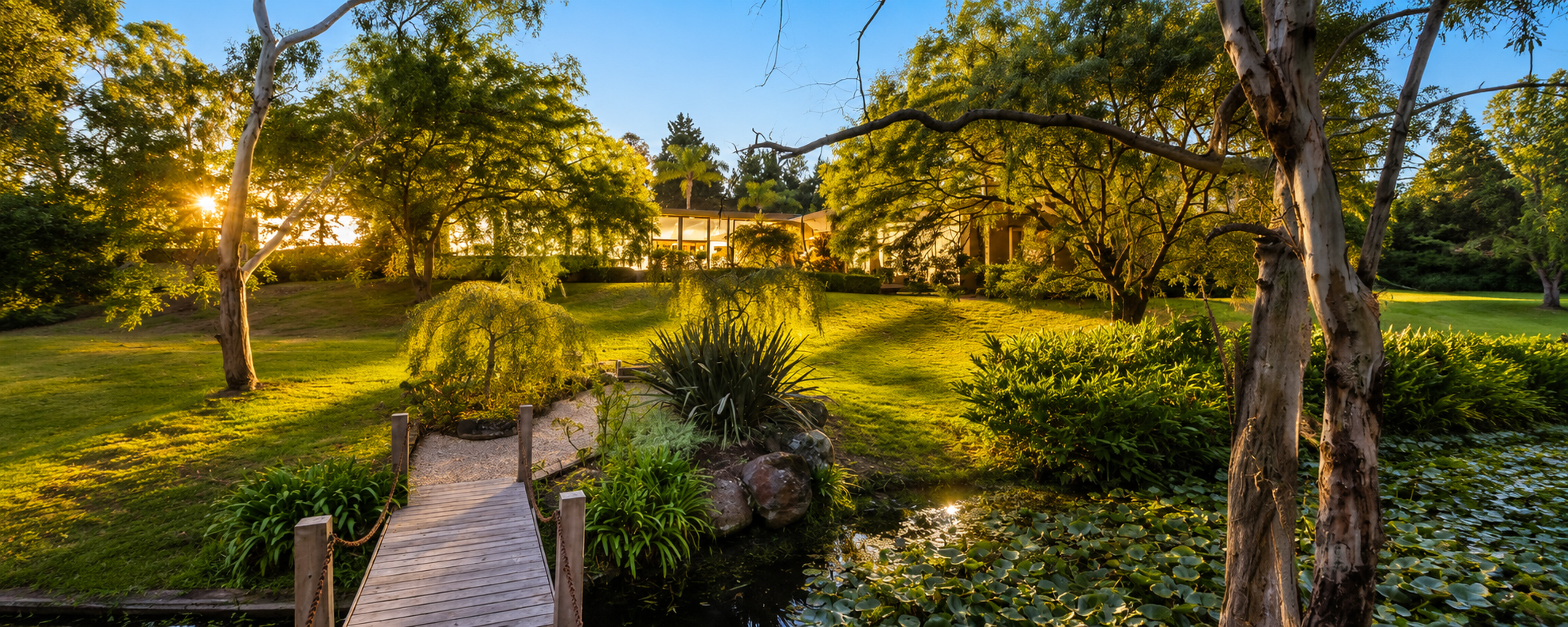
A beautiful block doesn't always start with a blank canvas.In Melbourne's leafy north-east, some of the most appealing properties are defined by what's already growing on them. Mature gums, established gardens and substantial tree canopies create privacy, shade and a connection to nature that can take decades to develop.
For homeowners planning a custom home or major renovation in Eltham, Lower Plenty, Rosanna or Warrandyte, these features can also influence where and how a home is built. So, can you build around established trees? Often, yes. But it requires careful planning.
Why Existing Trees Matter When Designing a Home
Mature trees can become an integral part of an architectural design.
They can provide:
Natural shade during warmer months
Privacy from neighbouring properties
Beautiful outlooks from living spaces
A sense of scale and connection to the landscape
An established garden setting from the moment you move in
Rather than viewing trees as obstacles, thoughtful design can explore ways to make them part of the home's character.
However, the health, species, location and structural condition of each tree need to be considered.
Understanding Tree Protection Zones
One of the most important considerations when building near established trees is the Tree Protection Zone (TPZ).
A TPZ is an area around a tree intended to protect its roots and other essential growing conditions during development.
There may also be a Structural Root Zone (SRZ), which relates to the roots important for the tree's stability.
These areas are generally assessed by a suitably qualified arborist.
Excavation, soil compaction, changes in ground levels and construction activity can all affect trees, even when the trunk itself is untouched.
That means protecting a tree involves much more than putting a fence around it.
Can You Build Within a Tree Protection Zone?
Potentially, but the extent and nature of any encroachment need professional assessment.
The proposed building footprint, foundations, excavation and construction access can all influence whether a design is appropriate.
In some circumstances, alternative construction approaches may help reduce impacts on root systems.
The right solution depends on the tree, the site and the proposed works.
It's important not to assume that a particular foundation system automatically makes construction safe for nearby trees.
Do You Need Council Permission to Remove a Tree?
Tree removal and pruning rules vary across Melbourne councils and properties.
Depending on the location, species, size and planning controls, a permit may be required.
Some properties may also be affected by vegetation protection, environmental or other planning overlays.
Before purchasing a property with redevelopment in mind—or developing a design that relies on removing trees—it's worth investigating the applicable requirements.
Designing a Home That Works With the Landscape
The most successful architectural responses often begin by understanding the site rather than imposing a predetermined floorplan.
This might involve:
Positioning the home around significant vegetation
The building footprint can sometimes be adjusted to retain important trees and their growing conditions.
Framing views through the canopy
Windows and living spaces can be positioned to celebrate the landscape without necessarily removing it.
Considering natural light
Established trees can provide valuable shade, but their location and canopy density may also affect daylight and passive solar design.
Planning construction access
Protecting trees during construction means considering machinery, deliveries, material storage and temporary works—not just the finished building.
The Value of Early Collaboration
An architect, arborist, builder and other relevant consultants may all contribute to developing an appropriate response.
The earlier significant trees are identified and assessed, the more opportunity there is to accommodate them within the design.
This can help reduce unexpected changes once documentation or construction is underway.
Building in Melbourne's Leafy North-East?
For many homeowners, the landscape is what makes a property worth building on in the first place.
At Natural Build, we appreciate architectural homes that respond thoughtfully to their setting, bringing together considered design, construction knowledge and craftsmanship.
Planning a home on a tree-filled property? We'd love to hear about your vision.